
Myles Standish, the actual soldier.
Longfellow made him a bashful suitor. The record shows something harder: a hired soldier of uncertain origin whose sword protected Plymouth Colony and whose most infamous act still divides historians. The real captain, without the varnish.
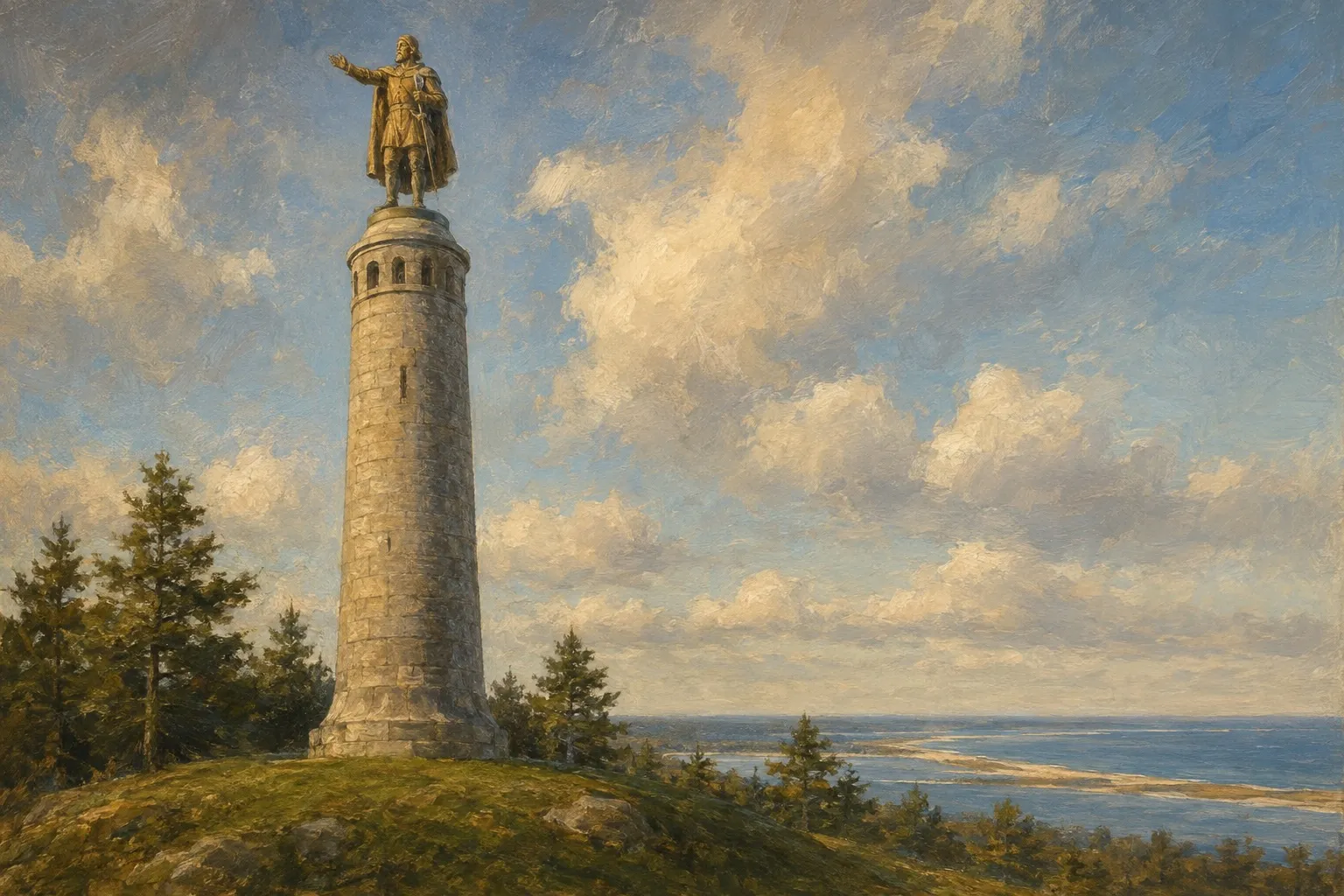 Standish above the bay, Captain’s Hill · Duxbury Uncommon illustration
The Pilgrim who wasn't one
Standish was not a Pilgrim in the religious sense at all. Born around 1584, in Lancashire or on the Isle of Man depending on which disputed account you follow, he was a professional soldier who had served in the Netherlands, and the Separatists hired him to handle the military side of their venture. He never joined their church. He came aboard the Mayflower with his wife Rose, led the first armed explorations of Cape Cod that winter, and buried Rose in January 1621 along with half the colony. Accounts of that winter note that Standish, spared by the sickness, was among those who nursed the dying.
The captain
Plymouth made him commander of its militia in 1621, a post he held for the rest of his life. He organized the colony's defenses, drilled its farmers into something like soldiers, and built its relationships and rivalries with surrounding Native communities alongside his close ally Hobbamock, a Pokanoket warrior who lived near him for years. He was short, red-haired, and famously quick to anger. A rival colonist, Thomas Morton, mocked him in print as "Captaine Shrimp."
Wessagusset, 1623
The act that defines the debate over Standish came in March 1623. A second English settlement at Wessagusset, in present-day Weymouth, had collapsed into starvation and theft, poisoning relations with the neighboring Massachusett people. Word reached Plymouth, through Massasoit, of a planned attack on both settlements. The colony sent Standish with eight men, and a mandate.
At Wessagusset, Standish invited the warriors Pecksuot and Wituwamat to share a meal in a one-room house. The door was barred behind them. Standish seized the knife hanging at Pecksuot's neck and killed him with it; Wituwamat and another warrior were killed as well, and Wituwamat's teenage brother was hanged. Standish carried Wituwamat's head back to Plymouth, where it was displayed at the fort as a warning. In the aftermath, other executions followed, regional trade with the colony collapsed for years, and Plymouth's own pastor in Leiden, John Robinson, wrote a pained rebuke to the colony, lamenting that any Natives had been killed and warning where such violence could lead.
Was it a preemptive strike that saved two colonies, or a massacre at a false parley? Contemporaries disagreed, and historians still do. Both readings are argued from the same handful of colonial sources; the Massachusett perspective, preserved by descendant communities, calls it plainly a massacre. What is beyond dispute is what happened in that room. For the world this violence entered, and what had already happened to the Native population of this coast, read our history of Mattakeesett.
The Duxbury years
Standish spent his last decades not as a warrior but as a farmer and town father. Granted land at the Nook, the peninsula now called Standish Shore, he helped found Duxbury, served the colony as treasurer, negotiated its debts, and lived quietly with his second wife Barbara and their children. He died on October 3, 1656, and was buried in the Old Burying Ground, where his grave would one day generate a strange story of its own. The 116-foot monument on Captain's Hill, and the gentler legend told about him in Longfellow's poem, came two centuries later.
Sources & verification
Drawn from colonial accounts (Winslow's "Good News from New England" as summarized by modern histories), the New England Historical Society, encyclopedic biographies of Standish, and the Massachusett Tribe at Ponkapoag's account of Wessagusset. Where interpretation is contested, we have presented both readings. Spot an error? Tell us. Last verified: July 20, 2026.
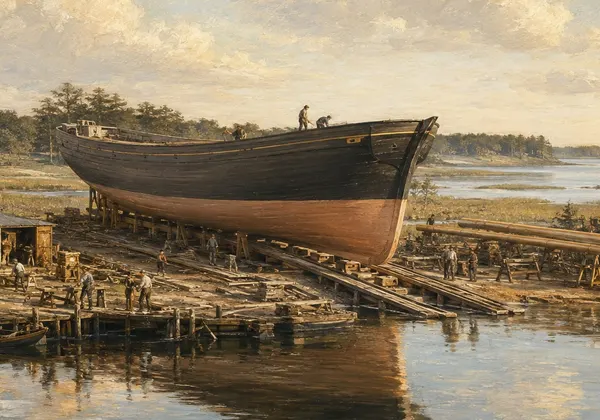
King Caesar
Ezra Weston II, the ship Hope, and the fleet that briefly made a small town famous.
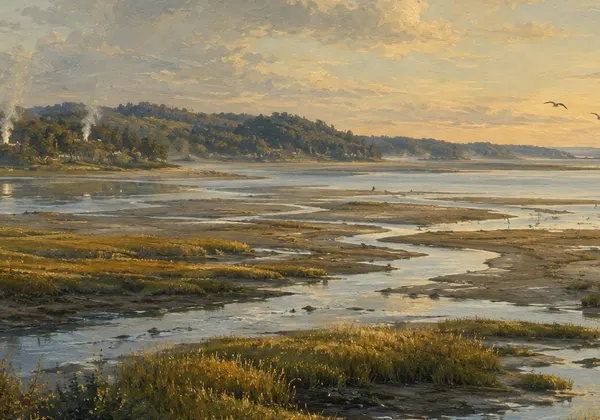
Mattakeesett
Ten thousand years of Wampanoag history on the bay: the place of many fish.
History & heritage
Plymouth Colony's second town: the Wampanoag homeland, twenty shipyards, and the families who built it.