Before ZIP codes, Duxbury had Sodom.
Modern Duxbury gets by on a handful of place names: Hall's Corner, Snug Harbor, the Nook. For a long stretch of its history it had a lot more of them, some biblical, some improvised, one supplied by an eccentric doctor mid-insult. Most have vanished. A couple never actually meant what you'd think.
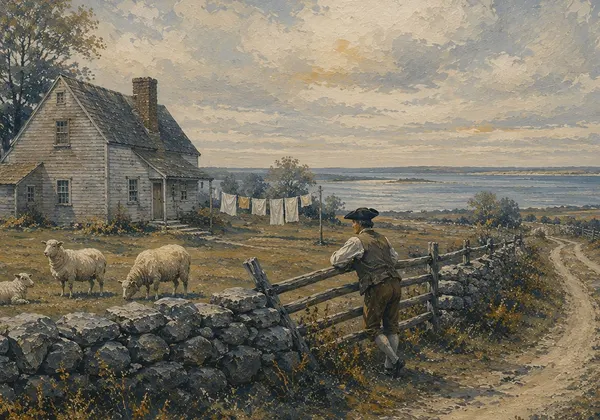
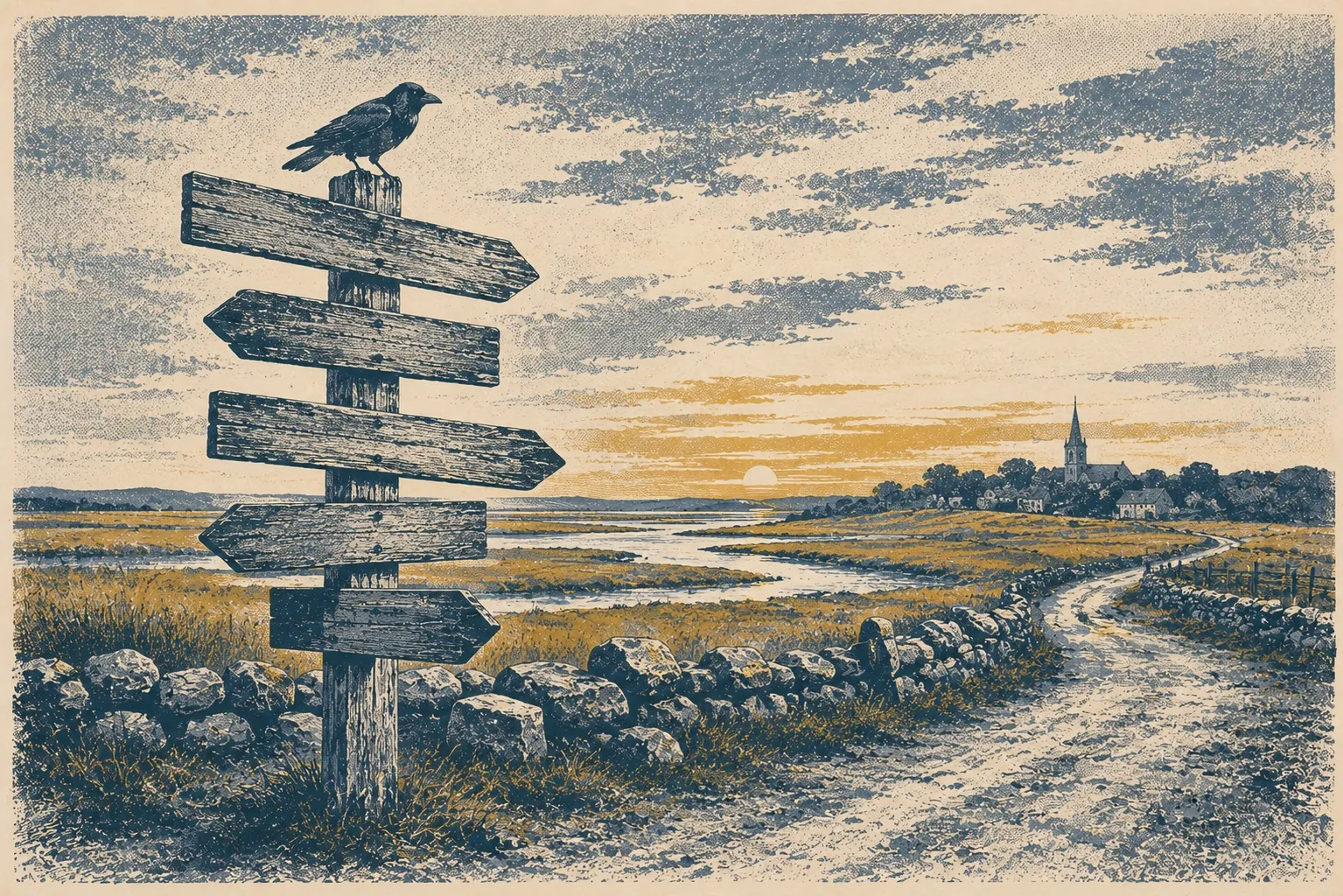 Every arrow pointed somewhere with a better name · Duxbury Uncommon illustration
Sodom (the Village)
The stretch of main street south of the Methodist churches, the town's actual commercial center, was known plainly as "the Village," and less plainly as "Sodom." The story credits Dr. John Wadsworth, a doctor with a reputation for eccentricity, who lived along the road young men took on their way to ship out on Duxbury's fishing vessels. Asked one day how far it was to "the village," he reportedly told them: "That place is Sodom. I tell you it is going to be sunk," and, unprompted, supplied a rhyme warning that if they escaped damnation on the voyage, it wouldn't be for lack of trying.
The name outlived the joke. In 1803, when the town fought bitterly over building a bridge across the Bluefish River, an anonymous local writer, possibly Dr. Rufus Hathaway or Major Judah Alden, satirized the whole dispute as a mock-Biblical parable, complete with "Caesar, the King" (a nod to shipbuilder Ezra Weston, already locally nicknamed King Caesar), commanding that "the people in the land of Sodom shall no longer be separated from the Westonites." The village south of the river got cast, by name, as the wrong side of a very small Red Sea. Full story on King Caesar.
Ashdod (the northwest village)
A small village in Duxbury's northwest corner took its name from one of the five great cities of the Philistines in the Old Testament. There's no surviving explanation for exactly why, but it fits a pattern: a Puritan town stocking its map with scripture the way other towns stocked theirs with royalty. The name has mostly fallen out of use today.
Weechertown or Loringtown
The southeast portion of town went by two names at once. "Loringtown" is the plain one, after a prominent local family. "Weechertown" has the better story: it's said to come from Abijah Sprague, who built a small hut in the area and called it his "weecher," borrowing the local Indigenous word for wigwam. A one-man dwelling ended up naming a whole quarter of the town.
Tarkiln or Chandlertown
The upper part of town, its own school district, carried both a trade name (Tarkiln, after the tar kilns once operated there) and a family name (Chandlertown). Its best surviving detail has nothing to do with either: at the junction where the Plymouth-to-Boston road met the road from Duxbury stood a tree known as the "Tree of Knowledge," with a box nailed to it that served as the depository for the town's mail. Residents came to collect their own letters and papers, or sent someone to do it for them, long before Duxbury had a direct mail route to Boston. The tree is gone. A guide-board with its likeness marked the spot as of 1849, and the name Tarkiln survives today attached to the town's community center.
Tinkertown
Another village in the upper part of town, and the one name on this list with no origin story attached to it at all, at least none that survives in the record. What does survive is the place itself: Tinkertown is still a recognized Duxbury neighborhood, and its Christmas Eve luminary tradition, lighting the street with candles in paper bags, reportedly goes back generations. Sometimes a name outlasts the reason for it.
Snug Harbor (newer than it looks)
Of everything on this list, Snug Harbor is the name most people would guess is oldest, a cozy nautical phrase that sounds straight out of the shipbuilding age. According to the Duxbury Rural & Historical Society's own archives, it isn't: a 1967 recollection of the town at the turn of the 20th century notes plainly that "what we call Snug Harbor" carried "a rather recent origin," well after the era that produced Sodom and Ashdod. The area it names, once dominated by the yards and wharves of the Duxbury Coal & Lumber Co., is today one of the most active parts of town: a working harbor, a yacht club, restaurants, and the Old Shipbuilder's Historic District all sharing a name that's younger than it has any right to sound.
Sources & verification
Drawn from Justin Winsor's "History of the Town of Duxbury, Massachusetts" (1849), a 1967 reminiscence by Cecil B. Atwater held in the Drew Archival Library's collection, and public records on present-day Tinkertown and Tarkiln. The exact authorship of the 1803 bridge parable is disputed between Dr. Rufus Hathaway and Major Judah Alden even in Winsor's own account, and is presented here as unresolved. Spot an error, or know a village name we missed? Tell us. Last verified: August 6, 2026.
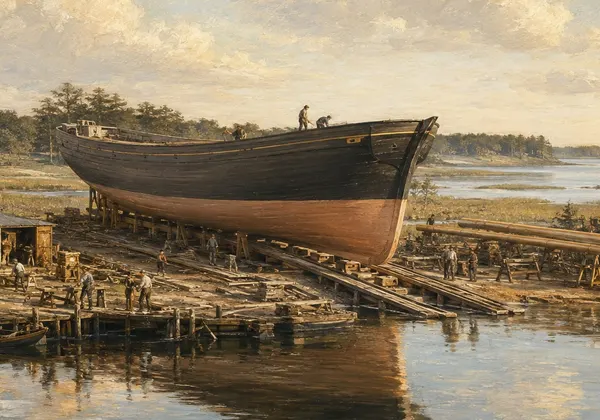
King Caesar
The Westons of Powder Point, the ship Hope, and the nickname the parable was making fun of.
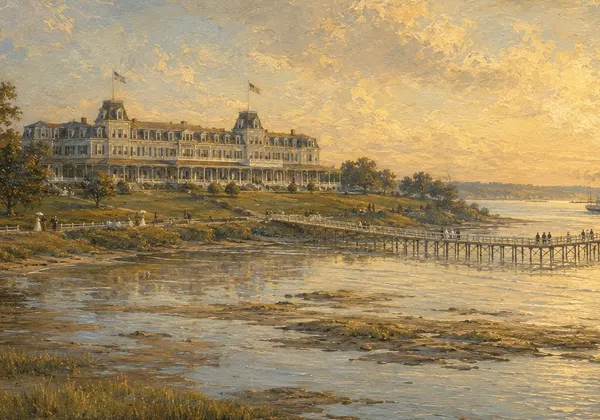
Lost Duxbury
A grand hotel, two vanished schools, twenty shipyards, and a real railroad, all gone the same way these names went.
The Quiet Century
The ninety years when most of these village names were in everyday use.