
Famous, for a town this size.
Four centuries of residents include Mayflower Compact signers, a witch-trial fugitive, a senator, America's first woman lighthouse keeper, the sea captain behind a Melville classic, the letter that started the environmental movement, and the guitarist from Aerosmith. Not bad for a town that spent most of its history farming. Every claim below links to the longer story or the record behind it.
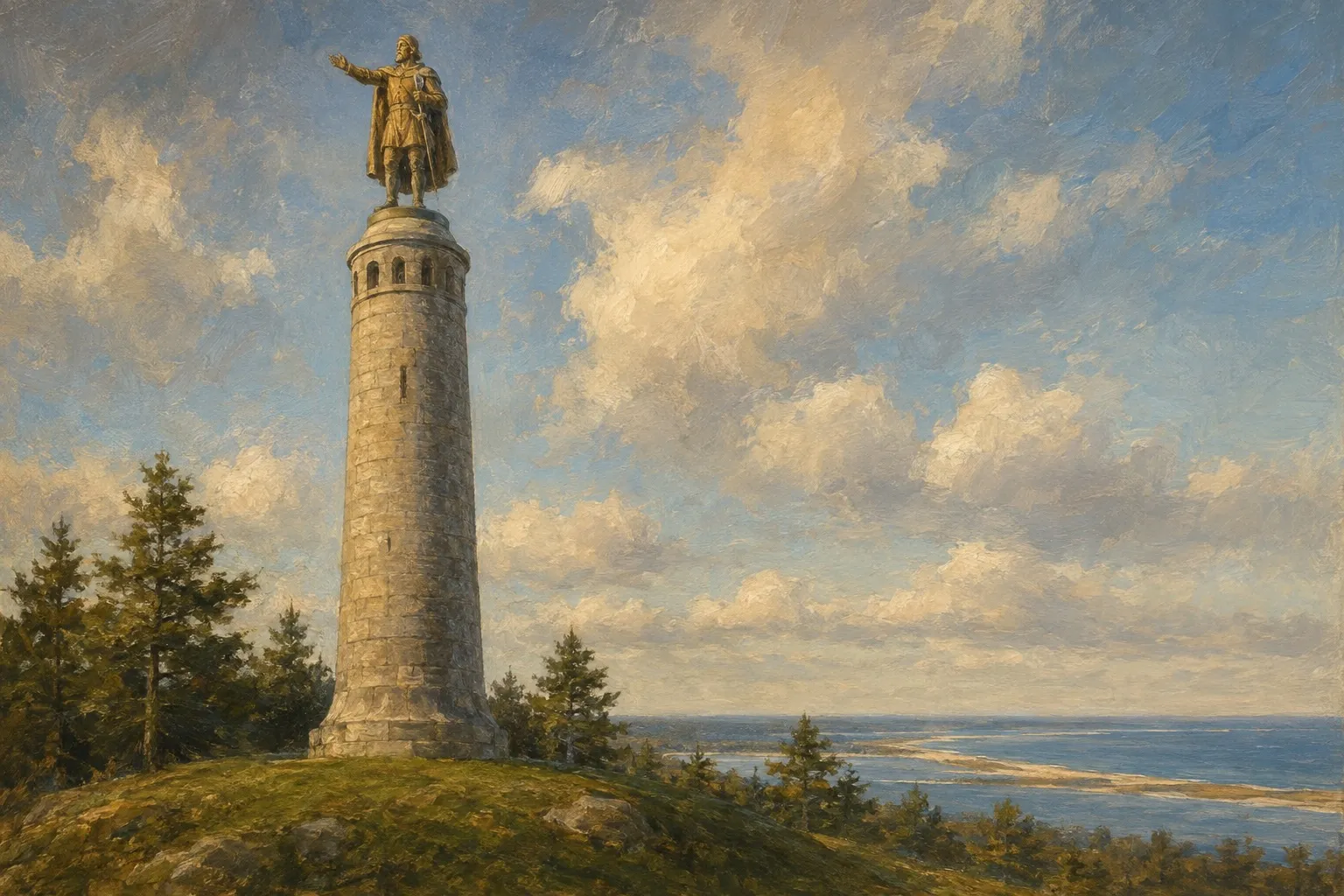 The one who got a 116-foot tower · Duxbury Uncommon illustration
The founding cast
Duxbury started as the farm town of Plymouth Colony's best-known names. Captain Myles Standish, the colony's soldier, took his land below the hill that now carries his monument. John and Priscilla Alden raised ten children here, and their house site is still run by their descendants. Elder William Brewster, the colony's religious leader, took land with Standish at the Nook; George Soule, another Compact signer, crossed as a manservant and ended up a Duxbury landowner with a set of ledges off Powder Point named for his son.
The founders you have not heard of are, in some ways, the better story: a Walloon refugee's son whose descendants include a president, a governor's stepson who negotiated land deals for the town, and the family that once held more of Duxbury than anyone and then vanished from it. They get their own page: The Other Founders.
The plot twists
John Alden Jr. · c. 1626–1702
The son of John and Priscilla grew up in Duxbury and became a prosperous Boston sea captain, which should have been the whole story. Then in May 1692 the afflicted girls of Salem named him a witch. At his examination they fell down on cue and claimed his touch burned; one accuser added, for good measure, that he sold powder and shot to the Indians and the French. Alden sat in a Boston jail for nearly four months while Salem hanged people, concluded the courts had lost their minds, and escaped. He fled to the town he knew best, telling relatives in Duxbury that he was “flying from the devil.” When the hysteria burned out he returned to Boston and turned himself in. No accuser appeared, and he walked free.
Amasa Delano · 1763–1823
Born in Duxbury in 1763, Delano went to sea and circled the globe three times as a master mariner. In February 1805, off Chile, he boarded a Spanish ship called the Tryal whose enslaved captives had seized her, and whose captain spent hours performing normalcy at Delano's side with a knife at his back. Delano told the story in his 1817 memoir, and forty years later Herman Melville lifted it, nearly whole, into Benito Cereno, one of the most studied American stories of the century. The Delano family papers, including Amasa's, sit in the Drew Archival Library on St. George Street.
Ichabod Alden · 1739–1778
A great-grandson of John Alden, born in Duxbury, colonel of the 7th Massachusetts Regiment. Posted to Cherry Valley, New York, in 1778, he dismissed warnings from allied Oneida scouts that an attack was coming and quartered himself outside the fort. The attack came on November 11. Alden was killed running for the fort he had declined to sleep in. The family name, it turned out, did not come with the family luck.
The public servants
George Partridge · 1740–1828
Delegate to the Continental Congress, member of the first United States Congress, and the reason Duxbury had a secondary school for eighty years: his $10,000 bequest founded Partridge Academy, which taught the town's students from 1844 until 1927.
Peleg Wadsworth · 1748–1829
Born in Duxbury, second-in-command of the 1779 Penobscot Expedition alongside Paul Revere, captured by the British in 1781, and escaped Fort George by cutting a hole in his cell's ceiling and crawling out along the joists. He served seven terms in Congress. His daughter Zilpah named her son Henry Wadsworth Longfellow, which means the poet who made Duxbury's love triangle a national legend was writing about his grandfather's hometown.
Peleg Sprague · 1793–1880
The other Duxbury-born Peleg: United States representative and then senator from Maine, and afterward a federal judge in Massachusetts for twenty-four years. His papers are also at the Drew Archival Library, a few shelves from Delano's.
Charlotte Bradford · 1813–1893
Daughter of a Duxbury sea captain, she left Boston in May 1862 to nurse Union wounded aboard the Sanitary Commission's hospital transport ships during the Peninsula Campaign, then ran the Commission's Soldiers' Home in Washington. Her childhood home on Tremont Street is now the Bradford House museum.
Hannah Thomas · kept the lights, 1776–1786
When her husband John left the Gurnet lighthouse for the Revolution and died of smallpox in Quebec, Hannah kept the twin lights burning herself for a decade, while raising three children and running the farm. That made her the first woman lighthouse keeper in America. The Gurnet sits within Plymouth's bounds, but the Thomases' story has always belonged to this bay.
The letter that launched a movement
Olga Owens Huckins · 1900–1968
A Boston literary editor, Huckins kept a two-acre private bird sanctuary at her Duxbury home. In 1957 state aircraft sprayed DDT over the area for mosquito control, and she gathered the dead birds afterward. She wrote a furious, precise letter to the Boston Herald and mailed a copy to a friend, a marine biologist named Rachel Carson. Carson said later that the letter was the moment she realized she had to write the book. The book was Silent Spring, the acknowledgments name Huckins, and the modern environmental movement has, in a real sense, a Duxbury return address.
The literary set
John Malcolm Brinnin · 1916–1998
Poet, critic, and the impresario who ran the 92nd Street Y's poetry program in New York, where he introduced Dylan Thomas to America and then wrote the definitive, harrowing book about it. Brinnin and his partner Bill Read kept a cottage on Powder Point, and the guest list came with it: Truman Capote, Elizabeth Bishop, and Richard Wilbur all came to Duxbury to write and to sit by the bay.
And an honorary member: Henry Wadsworth Longfellow never lived here, but he descended from the Aldens through his mother and from Duxbury-born Peleg Wadsworth, and his 1858 poem did more for the town's fame than any resident ever managed. The record behind it is on the Courtship page.
The modern crowd
Living people get career facts only. This is a small town, and we like our neighbors.
Joe Perry
Aerosmith's lead guitarist kept an estate on the bay side of town for decades, recording and raising a family here between tours, before selling the property in 2022.
Juliana Hatfield
The indie-rock songwriter grew up in Duxbury before Berklee, the Blake Babies, a turn in the Lemonheads on It's a Shame About Ray, and the solo run that produced “My Sister” and “Spin the Bottle.”
Scott Woodruff
Raised in Duxbury, Woodruff started recording reggae alone in 2005, layering every instrument himself under the name Stick Figure. The one-man project became a string of Billboard Reggae number ones, and trade press now calls him the top-selling living reggae artist. Not the genre anyone would have predicted from a cold-water oyster town.
Bill Curley
Led Duxbury High to a state title, made McDonald's All-American, scored more than 2,000 points at Boston College, and went 22nd overall in the 1994 NBA draft. After five injury-shortened pro seasons he came home to run his basketball clinic in town, and later coached Emerson College to its first NCAA tournament.
Common questions
Who is the most famous person from Duxbury?
Historically, Standish and Alden, no contest. Today it depends on your playlist: Joe Perry or Stick Figure's Scott Woodruff.
Did anyone from Duxbury sign the Mayflower Compact?
Four signers settled here: Standish, Alden, Brewster, and Soule. The town they founded in 1637 was Plymouth Colony's second.
Is Duxbury connected to FDR?
Directly. Philip Delano, who settled here in the 1630s, is a direct ancestor of Franklin Delano Roosevelt. His story is on The Other Founders.
Sources & verification
Drawn from Historical Digression's account of Capt. John Alden at Salem, the Drew Archival Library on Amasa Delano and its Peleg Sprague papers, the Federal Judicial Center, Rachel Carson's acknowledgments in Silent Spring, the Boston Globe, Boston College athletics records, and standard biographical references, cross-checked against the primary-source research behind this site's history pages. Know a name we missed, or a fact we got wrong? Tell us. Last verified: September 27, 2026.
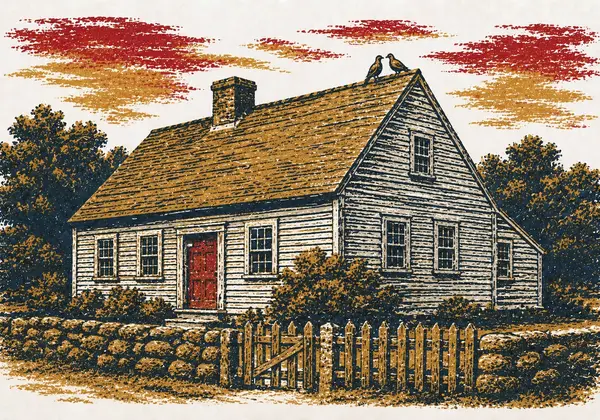
The courtship, fact-checked
Longfellow made Duxbury's founders famous. What the record shows about Standish, Alden, and Priscilla.
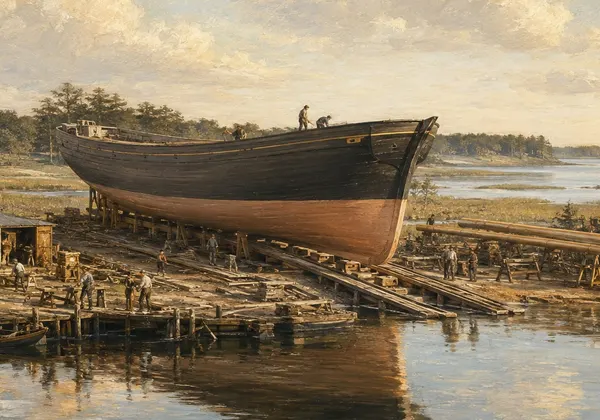
King Caesar
The richest man in town, twice over: the Westons and the fleet that briefly made Duxbury famous.
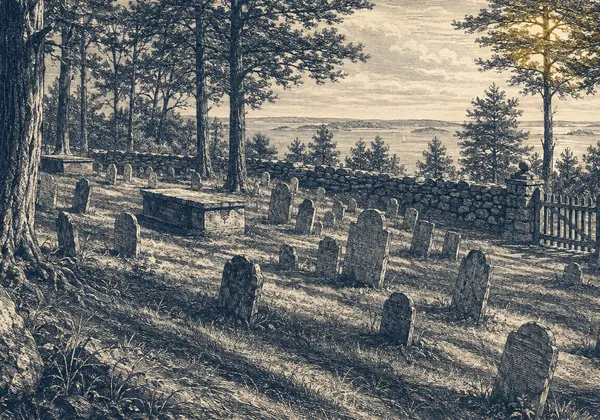
The Old Burying Ground
Built 1638, abandoned by 1789, forgotten for a century: the resting place of half the names on this page.