
The railroad that turned Duxbury into a summer town.
After the shipyards went quiet, Duxbury nearly went with them. Then in 1871 the train arrived, Boston discovered the bay, and a struggling town reinvented itself as a resort. The summer-town identity Duxbury carries today was born in that rescue.
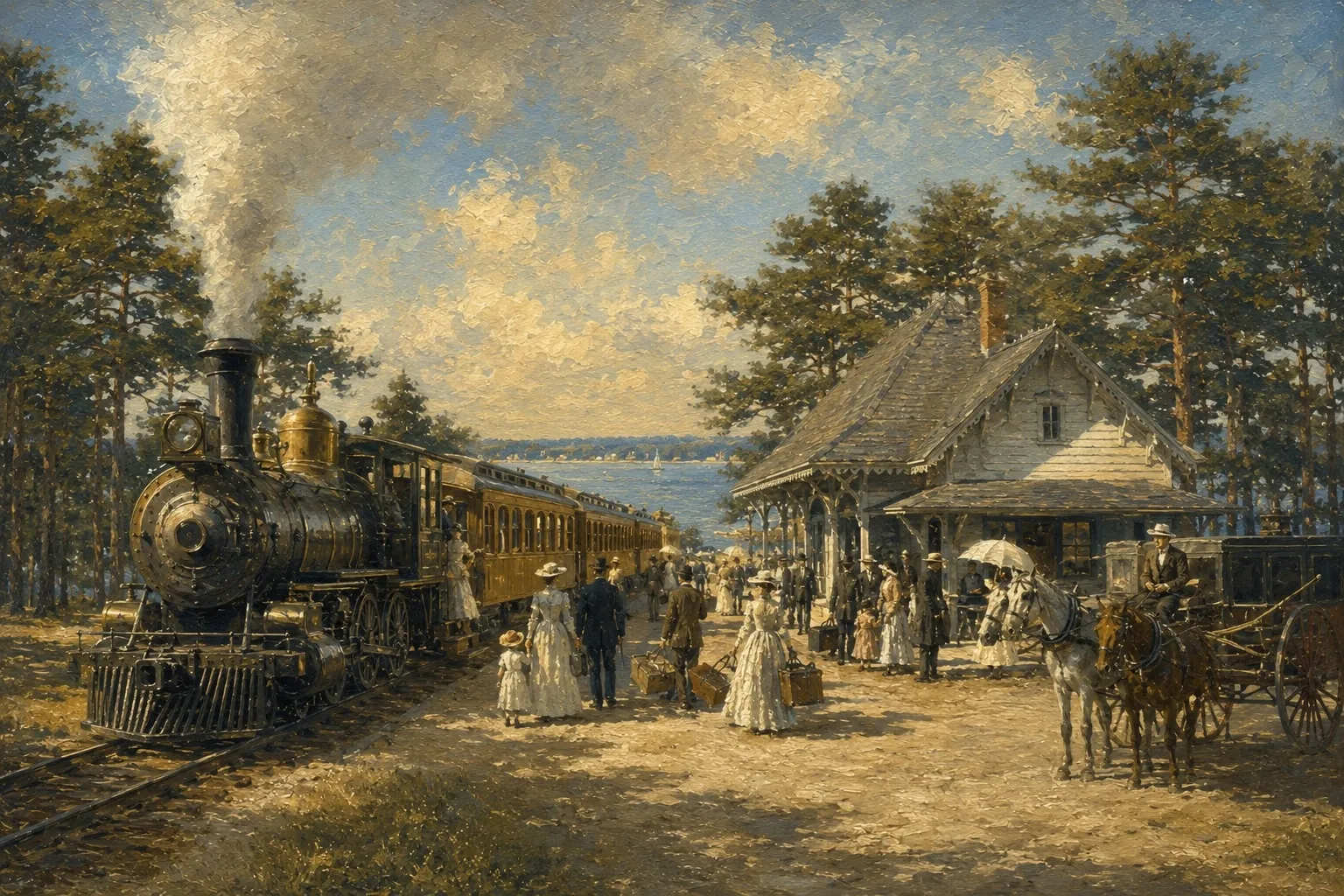 The dollar-fifty ticket arrives · Duxbury Uncommon illustration
The quiet decades
When the age of sail ended in the 1850s, Duxbury's economy ended with it. The shipyards that had launched the Weston fleet fell silent, young people left for the cities, and while other Massachusetts towns industrialized and grew, Duxbury slid into a long decline. The silver lining took decades to reveal itself: with no money to rebuild, nobody tore anything down. The town's colonial and Federal streetscapes froze in place.
A dollar fifty to paradise
The Duxbury & Cohasset Railroad changed everything. Once the line was complete in the early 1870s, a Bostonian could pay $1.50 for a round trip ticket and trade the city's summer heat for a rural town on a clean, quiet bay. They came in numbers. Boarding houses opened everywhere, the Myles Standish Hotel rose at the Nook and became enormously popular, and a colony of summer cottages sprang up along what is now Marshall Street. By the 1880s the beach itself was filling with cottages, and in 1892 the town built the Powder Point Bridge largely so summer people could reach them.
What the summer people built
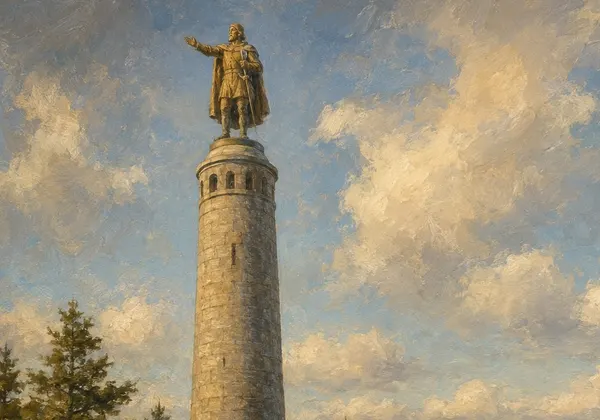
The resort era gave Duxbury more than an economy. The tourist fascination with all things Pilgrim produced the Standish Monument, its cornerstone laid in 1872 and the 116-foot shaft finally completed in 1898. The impulse to keep the town pretty produced the Duxbury Rural Society in 1883, which cleaned up the Old Burying Ground, planted trees, and evolved into today's Rural & Historical Society. Even the town's self-image, a place preserved rather than developed, dates to these years, when visitors valued Duxbury precisely because it had been left alone.
The pattern holds
Summer-town Duxbury carried on well into the twentieth century, and it took the construction of Route 3 to change the equation again, putting Boston within commuting range and transforming a seasonal resort into the year-round residential town of today. But the shape of the place, the cottages, the preserved center, the beach at the middle of everything, is the resort era's inheritance. The full timeline puts these decades in context.
Sources & verification
Drawn from the Duxbury Rural & Historical Society's historical sketch of Duxbury and its accounts of the Rural Society's founding, with railroad and hotel details as recorded there. Spot an error? Tell us. Last verified: July 20, 2026.
History & heritage
Plymouth Colony's second town: the Wampanoag homeland, twenty shipyards, and the families who built it.
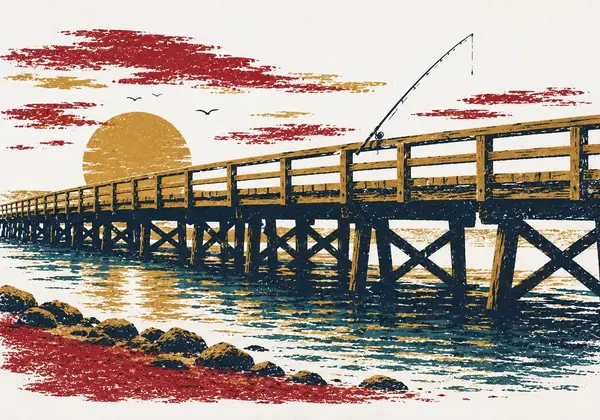
Powder Point Bridge
Built 1892, burned 1985, rebuilt 1987, and now at the center of a $172 million fight.
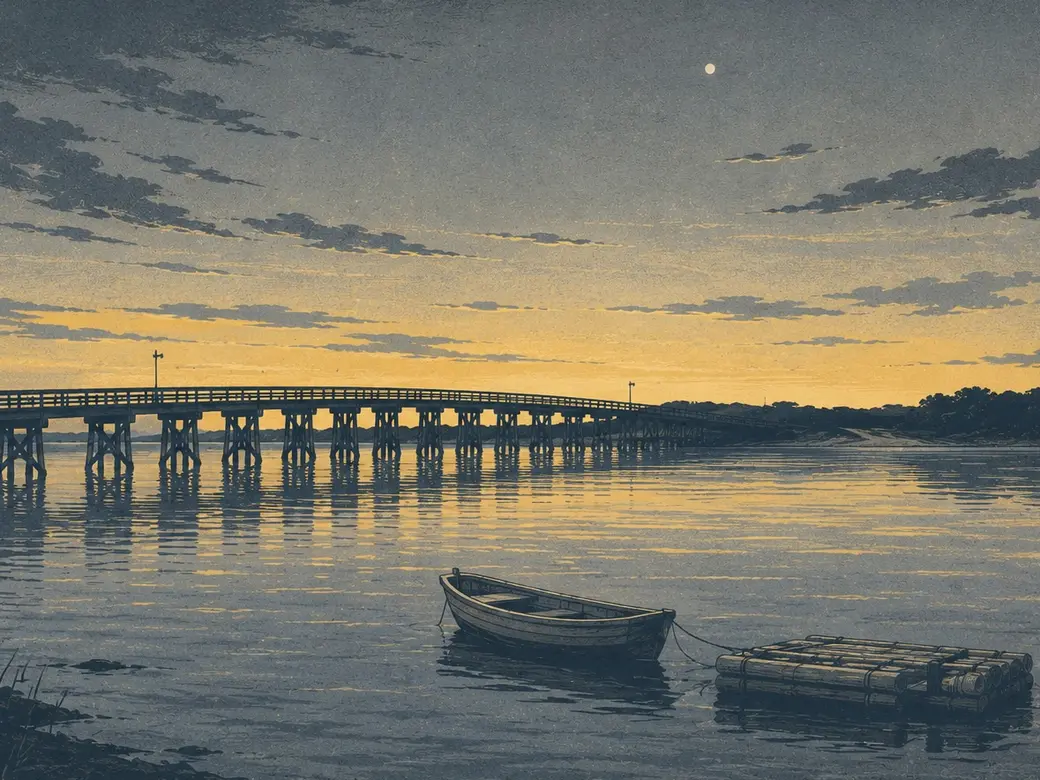
A perfect day
One ideal day: Snug Harbor croissants, oysters from the bay, and the bridge at golden hour.