
A half mile of wood, and the town that keeps it standing.
The Powder Point Bridge has burned, been demolished, been rebuilt, and been repaired more times than anyone can count. Now the state wants to replace it with concrete, and Duxbury is having none of it. The full story of the town's most contested landmark.
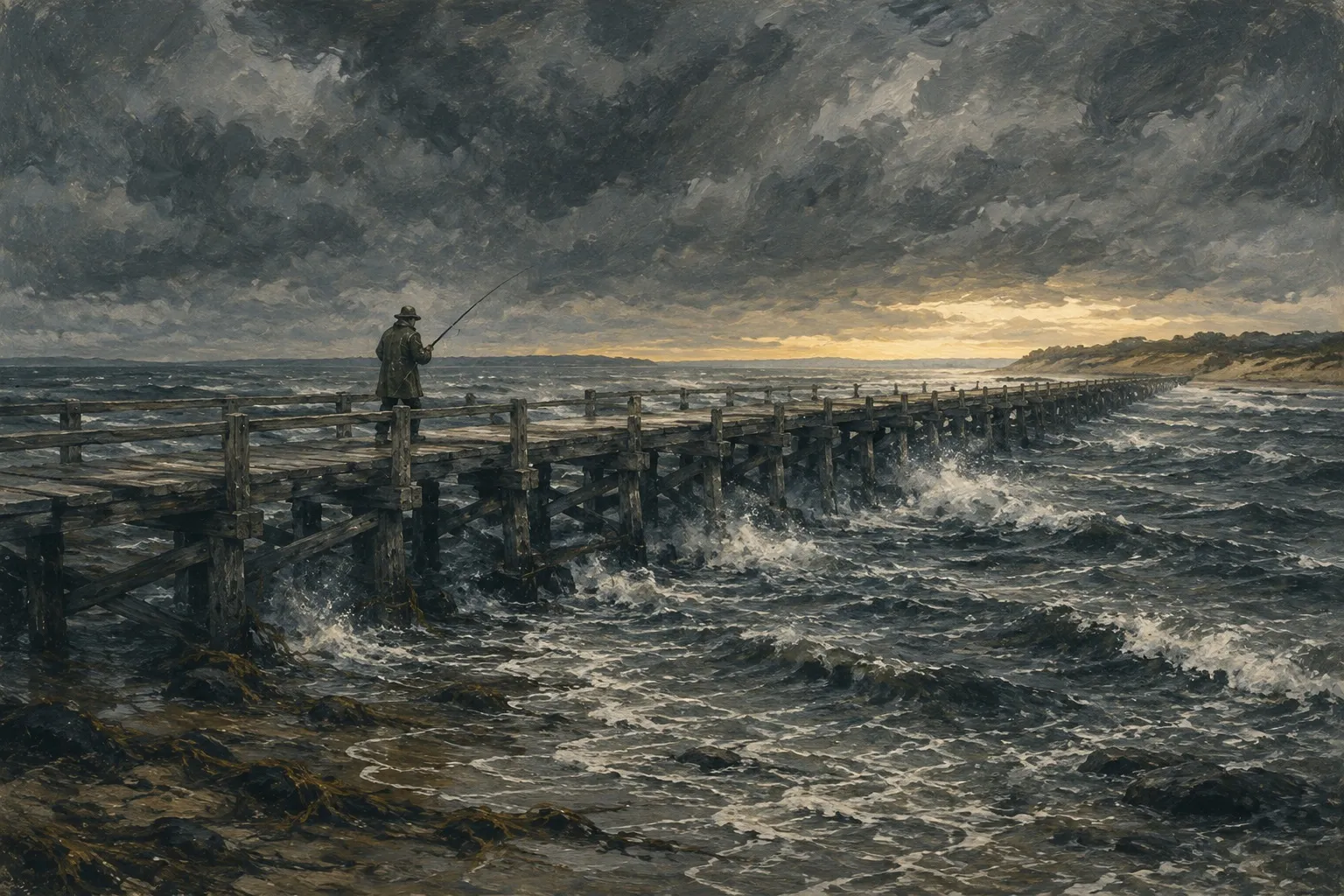 A working bridge, working · Duxbury Uncommon illustration
Why it was built
Before the bridge, reaching the barrier beach from town meant a long detour through Marshfield or a boat. As Duxbury grew into a summer destination in the late 1800s, that stopped being acceptable. Funded by the Town, Plymouth County, and the Wright family of Powder Point, construction began in 1887, and the bridge officially opened on October 8, 1892, complete with a draw to let taller vessels through. Locals called it the Long Bridge or the Gurnet Bridge, and it made the beach part of everyday town life, right in the middle of the summer resort boom that was already reshaping the town.
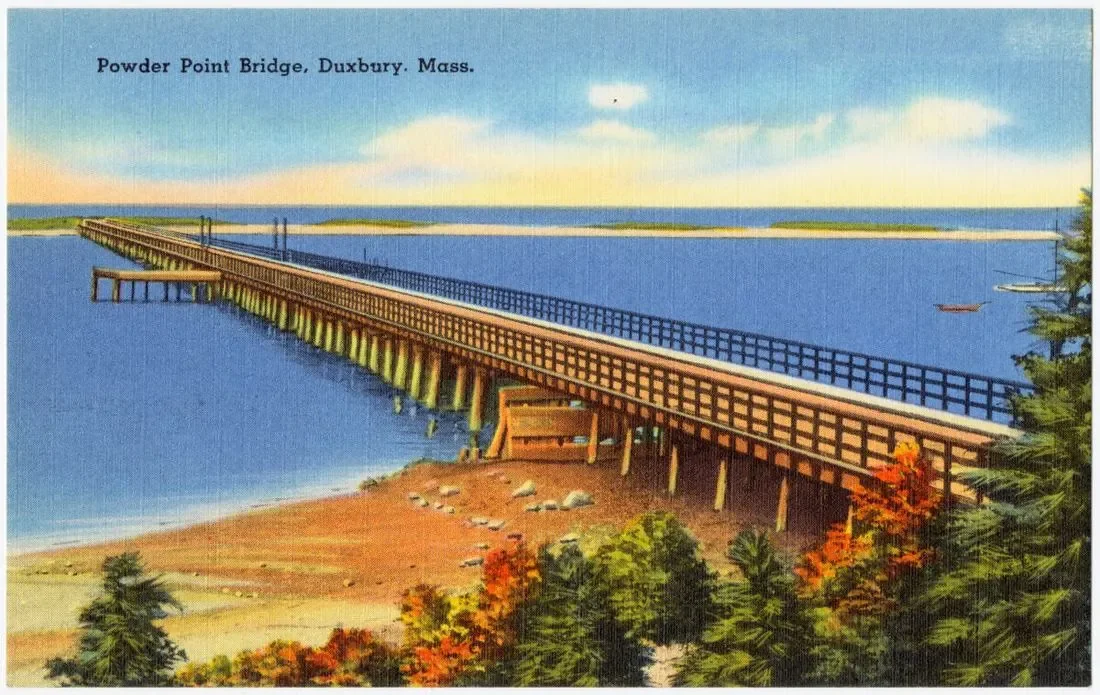
The longest? Probably. Sort of.
At about 2,200 feet, the bridge has long been celebrated as the longest wooden bridge in America, a claim the Duxbury Rural & Historical Society notes has been disputed for about as long as it has been made. What is not disputed: it is a very long wooden bridge, and there are not many of those left. In 1941 the state legislature gave Duxbury sole control of it, which is how a small town came to own and maintain a piece of infrastructure most states would run themselves.
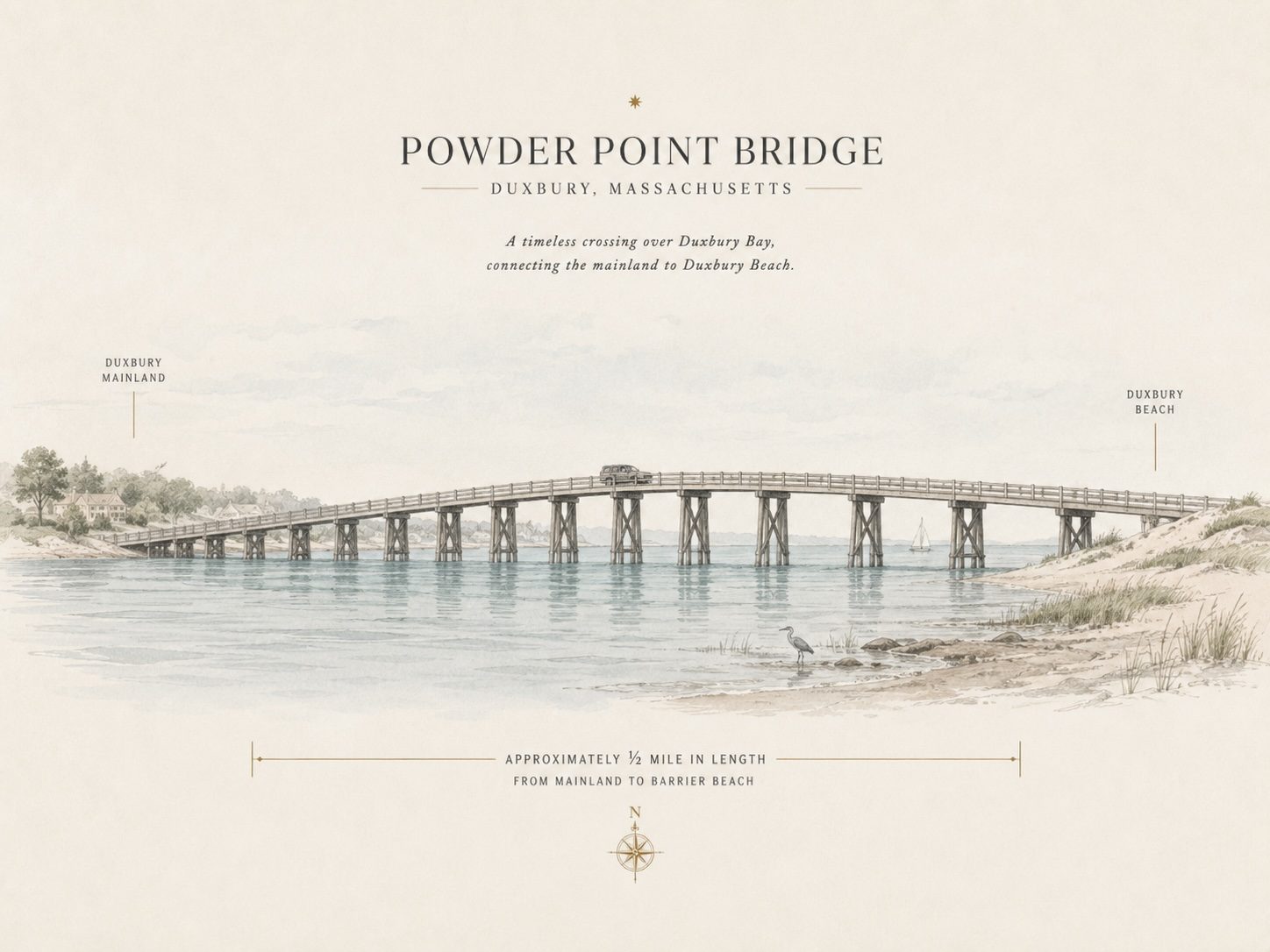
Fire and rebirth
The town rebuilt over half the bridge in 1971. Then, on June 11, 1985, a fire destroyed a twenty-foot stretch of planking, and the repair work uncovered structural problems serious enough to close the bridge outright. Rather than patch it, the town demolished the 93-year-old structure and built a new wooden bridge in its place, using tropical hardwoods instead of the original oak and pine. The new bridge opened on August 29, 1987. It is the bridge you walk today, built deliberately in the image of the old one.
The bridge today
Keeping a half mile of timber standing in salt water is a permanent job. The bridge is inspected annually, and repair crews regularly add reinforcing piles and bracing; a round of work in early 2025 cost the town about $451,000. Ask anyone in town what the bridge sounds like and they will tell you about the thump of tires on wooden planks. It is the sound of arriving at the beach.
The fight over its future
That sound is now the subject of a full-scale civic battle. MassDOT has determined the bridge needs replacement, citing deterioration in the wooden pilings, and is planning a new concrete-and-steel span, a project reported at roughly $172 million. A residents' nonprofit, Save Our Bridge, Inc., has gathered thousands of petition signatures asking that the wooden bridge be preserved and repaired instead, and is seeking historic recognition for it. There is a wrinkle there: the 1892 bridge was found eligible for the National Register back in 1983, but the current structure dates to 1987, and in 2024 state preservation officials concurred it is too young to qualify. As of this writing the outcome is unresolved. Whatever happens, it will be decided in public meetings, and it is the most consequential question the town has faced about its favorite structure in a generation. For how the bridge fits into a beach day right now, see our complete beach guide.
Sources & verification
Drawn from the Duxbury Rural & Historical Society's Powder Point Bridge collection at the Drew Archival Library, MassDOT's replacement project pages, and 2025–26 local reporting on repairs and the preservation campaign. Note that some official sources date the original construction to 1891 and the rebuild to 1986; we follow the DRHS archive's dates of 1892 and 1987. Spot an error? Tell us. Last verified: July 20, 2026.

News briefs
Short, sourced takes on town happenings, each pointing you to the original coverage.
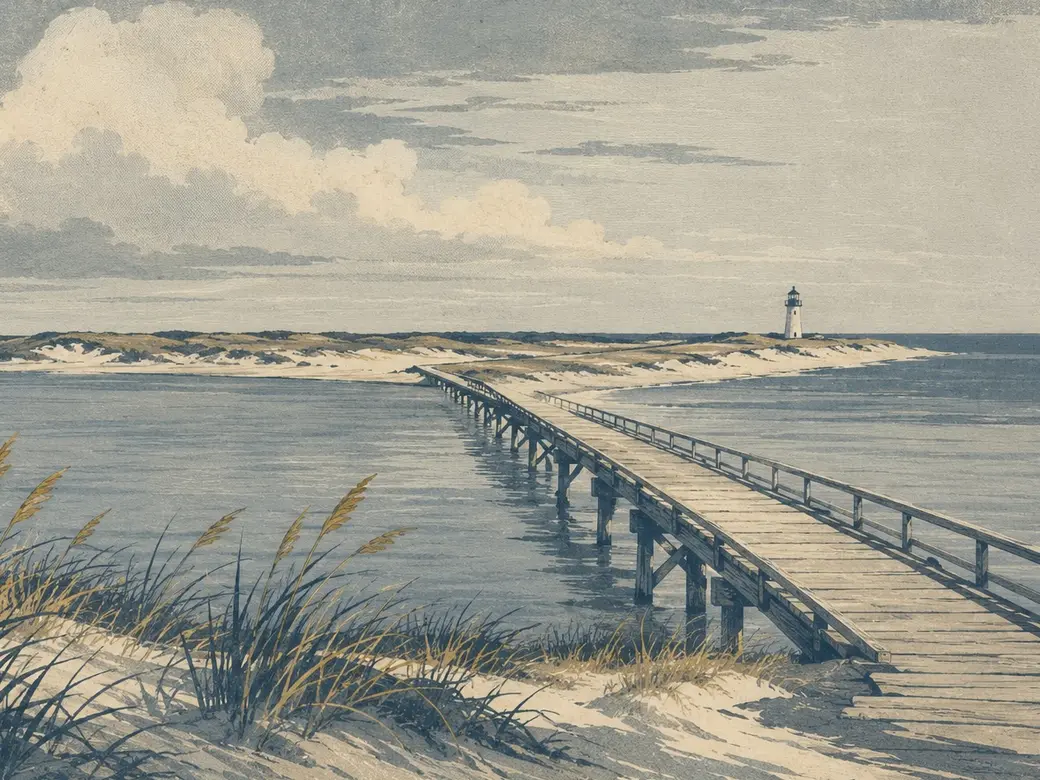
The beach guide
How the beach actually works: parking, stickers, dog rules, closures, and driving on the sand.

History & heritage
Plymouth Colony's second town: the Wampanoag homeland, twenty shipyards, and the families who built it.